


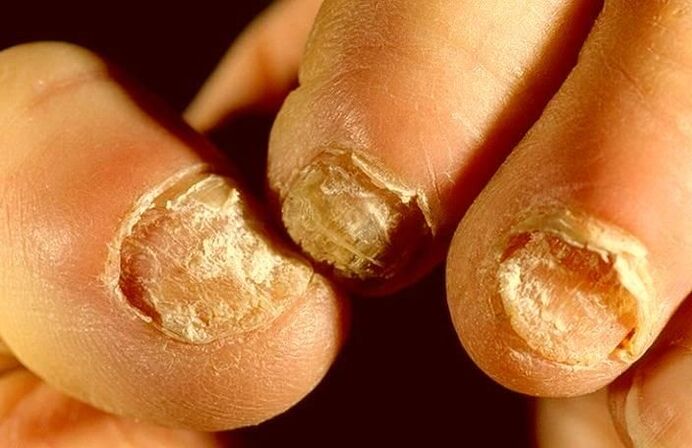
Even with the modern level of medical development, nail fungus remains one of the most common problems on the planet.According to various statistics, this pathological process in the legs alone is diagnosed in approximately 10-20% of people on the planet every year.This is due to the high degree of infectiousness of fungal life forms, as well as their prevalence in the environment.
What causes people to be susceptible to fungal infections?
First of all, fungal infection of the toenails is such a pressing problem due to the prevalence of fungi in the environment.Fungal life forms are present literally everywhere, in water, soil, they are carried by animals and people.Particularly high concentrations of fungi are observed in places of high humidity, including bathrooms, showers, swimming pools, and saunas.
Important!Fungi are constantly found on human skin, however, in this case we are talking about opportunistic species of these microorganisms.They are freely transmitted through contact with the carrier or his personal belongings.However, opportunistic forms of fungi pose a threat only if immunity is reduced.
Taking into account the above information, the main cause of fungal nail infection is a decrease in the body's defenses.Thus, factors predisposing to infection are considered:
- hypothermia;
- stress;
- sleep disorders;
- concomitant diseases;
- metabolic disorders in the body;
- advanced age;
- injury to fingers, nail plates, etc.
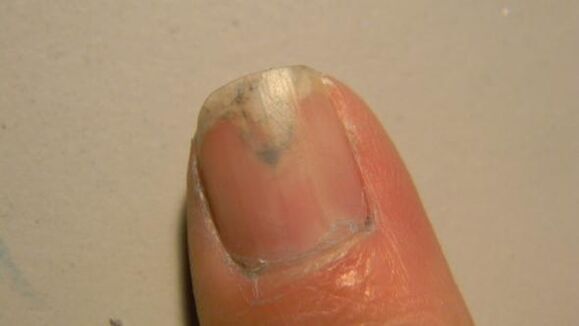
It is also important to know that in the CIS countries the most common pathogens of toenail fungus are three groups of fungi:
- dermatophytes;
- yeast;
- moldy.
Features of treatment with traditional methods
The very first symptoms of the development of pathology are as follows:
- Too frequent appearance of hangnails and damage to the cuticle.
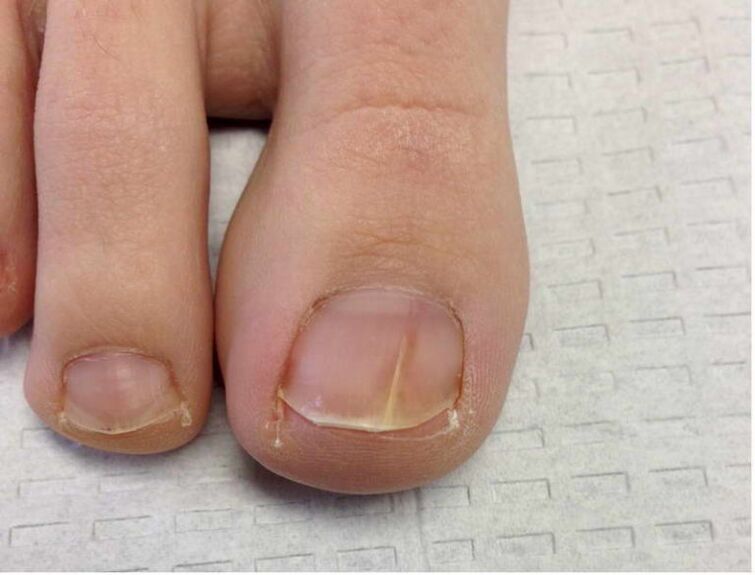
- Changes in the color of the nail plate can be large-scale or appear in the form of white spots, stripes in certain areas of the nail.
- The appearance of a yellow edging along the edges of the nail plate.
- The disappearance of the healthy shine of the nail, becoming dull and rough.
- Increased fragility of nails, their thinning, excessive softness, in the absence of these signs previously.
- Delamination of the nail plate, the appearance of bumps, waves, and cracks on its surface.
Important!Even if one or more symptoms from the list above clearly appear, treatment should not be started thoughtlessly.Before using any traditional medicine, you need to make sure that the fungus has actually affected the nail.To do this, consult a doctor for diagnosis.
Traditional recipes and methods for treating nail fungus
In folk medicine, there are indeed many different remedies aimed at combating nail fungus.But before moving on to considering effective techniques and individual recipes, it is important to remember a number of rules:
- Some components, including those of natural or natural origin, can cause allergic reactions.Therefore, before using this or that product, make sure that you are not allergic to one of the components.
- It is very important to consult a doctor before using a recipe you like, especially if you are already using any medications.This applies to any folk methods, even the most harmless ones.
- Don’t think that since it’s a folk remedy, it can’t do any harm.Strictly adhere to the time frame during which the compress and prepared ointment are applied.Otherwise, especially when using aggressive components, there is a risk of damage to the skin, the nail plate itself, and burns.
Important!To cure fungal nail infections using only traditional medicine, a systematic approach is required.If you miss even one day, you risk reducing the achieved therapeutic effect to nothing.Therefore, take treatment seriously, apply medicinal compositions and take baths according to the instructions described, without skipping procedures.
Using Vinegar
Let's look at 2 particularly effective methods of using this product:
- Lotions - take a round cotton sponge or a small piece of medical cotton wool, soak it in vinegar, squeeze it lightly and apply it to the affected area.The lotion must be removed after 10-15 days (depending on the sensitivity of the skin), the procedure is repeated once a day for a week.If the skin is too tender, vinegar can be diluted with purified water in a 1 to 1 ratio.
- Ointment - to prepare it you will need dimethyl phthalate purchased at the pharmacy, seventy percent vinegar essence, glycerin and olive oil (if the latter is not available, sunflower oil will do, but only refined oil).All components are mixed at the rate of 2 parts of essence, 1 part of other components.The finished ointment is applied only to the affected areas; it is recommended to wash it off after 8-10 hours.Store the prepared medicine in the refrigerator, placing it in a sealable glass container.
Important!Treatment with vinegar requires caution and is completely avoided if the integrity of the skin is damaged.Otherwise, the risk of soft tissue burns increases.
Iodine in the fight against toenail fungus
The most effective methods of using iodine:
- Frequent use - every day in the morning and before going to bed, drip or generously moisten the fungus-affected areas with a 5% iodine solution.Healthy tissue around the nail plate should also be treated, but not more than once within 48 hours.
- Baths are an effective method of combating fungal nail infections.To use it, add 3 drops of antiseptic per 2 liters of water to a bowl of hot water.In such a bath we steam our feet for 20-25 minutes (as the water cools, add hot water), after which we cut off the affected areas of the nail plate at the root.After trimming the nail, it is recommended to additionally treat the finger with hydrogen peroxide.You can repeat the procedure daily, but no more than 1 time per day.
- Compress – it is recommended to do it before bed and leave it overnight to consolidate the therapeutic effect.The procedure is simple - moisten a cotton pad in antiseptic, apply strictly to the affected area, then secure with a plaster or bandage.The course of treatment in this case should not exceed 14 days.
Application of birch tar and its derivatives
Birch tar prevents structural damage, preventing the destruction of the nail plate and accelerating the healing of affected areas.
- Ointment - to prepare it you will need to mix birch tar with badger fat in equal parts (fat can be replaced with baby cream).The product is mixed until it reaches a homogeneous consistency, after which it is put in the refrigerator for a day (store only in glass containers with a lid).Subsequently, the ointment is applied daily to the nail and adjacent areas for 1.5-2 hours.Removal of the ointment at the end of the procedure is carried out using soap and warm water.
- Remedies for toenail fungus, in the preparation of which soap with the addition of tar (tar) are used, have a no less pronounced therapeutic effect.The simplest and most effective way is a bath based on tar soap.To do this, hot water (3-4 liters) requires about 45-50 g of soap; in this bath, the legs are steamed for 15-20 minutes.During the procedure, dead skin layers and fungus-affected areas of the nail plates are removed.After the specified time has passed, you need to dry your feet with a clean towel.
Important!Tar and tar soap are used with caution.Such products are contraindicated for patients with dry or overly sensitive skin, as well as those suffering from allergic reactions to this natural component.
Recipes using soda
Baking soda helps soften nails and dead skin, making them easier to press on.
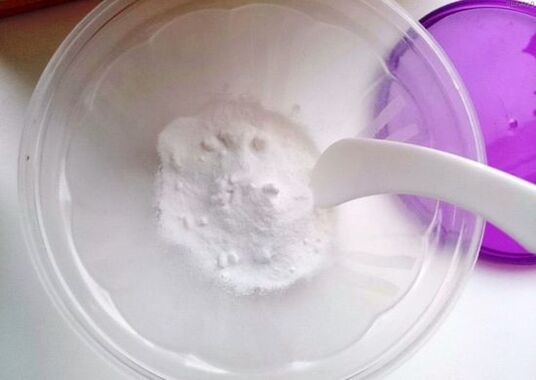
Let's consider folk recipes for the treatment of toenail fungus, the basis of which is soda:
- Preparing baths - fill a basin with hot water (about 5 liters), add a small amount of liquid soap, two and a half tablespoons of sodium bicarbonate and stir.Soak your feet in such a bath for up to 20 minutes, after which the overgrown areas of the affected nail plate are cut off.
- Soda paste - put 200 mg of warm water into a bowl, then add soda there, stirring at the same time.Bicarbonate should be added until a semblance of a paste of moderate thickness is formed in the bowl.The finished product is applied to the nail plates affected by fungal life forms for 10 minutes.The procedure is completed by washing off the resulting composition with warm water and wiping the limbs with a clean towel.This method is used daily, but not more than 2 times a day.
Copper sulfate
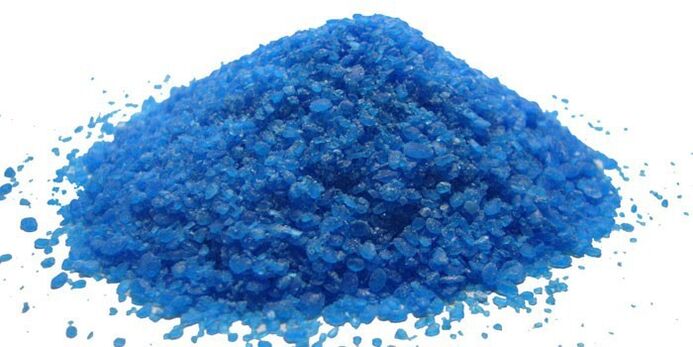
With the help of copper sulfate, even advanced cases of fungal infection can be eradicated, but maximum effectiveness is achieved in the early stages of pathology progression.
- Bath - you need to dissolve 15 g of copper sulfate in 15 ml of boiling water by thoroughly mixing.The resulting composition is added to a basin of hot water, where the feet are immersed for 15 minutes.At the end of the procedure, wash your feet with warm running water, but do not wipe them, but let them dry.If we are talking about advanced cases of fungal infection, antifungal ointment or cream is applied to dry feet.
- Ointment - to prepare it, copper sulfate powder is fried in a frying pan for 3-4 minutes.Then it is mixed with goose fat and yellow sulfur until a homogeneous mass is obtained (all components are selected in equal proportions).The ointment is applied strictly to the areas of the nail plates affected by onychomycosis, excluding its contact with the skin.The course of therapy with this folk remedy does not exceed 10 days.
Important!The effectiveness of copper sulfate is maximized due to its properties and ability to penetrate deep into tissues.This component is very aggressive and can be toxic if used incorrectly.Therefore, its use must be previously agreed with a doctor.
Kombucha in the fight against fungus
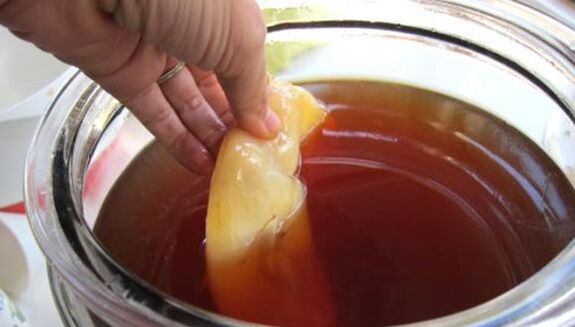
For treatment, you will need to make a concentrated infusion of kombucha.To do this, it is infused for 3 months, then boiled for about an hour and filtered.The method of using the decoction is simple - soak a cotton swab in it, apply it to the sore nail and fix it with cling film overnight.By morning, the nail becomes soft, which makes it easy to remove the affected areas.
A less complex, but also effective method of treatment is rubbing kombucha powder into the affected areas.To do this, a small piece is cut from the mushroom, which should be crushed and rubbed.
Treatment methods using salt
Approximately the same results are shown by using both regular table salt and sea salt.
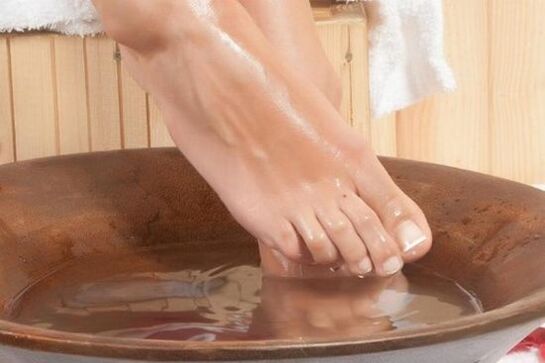
- The most effective way to combat nail fungus is to prepare a decoction of sea salt in combination with essential oils.To do this you will need fir, tea rose, eucalyptus or chamomile oil.Then, per liter of water, mix 50 g of salt and 3-4 drops of oil, the water should be hot, but not boiling water.We take baths in this mixture every day before bed for 21 days.
- It is effective to make baths with salt and vinegar.To do this, dilute a total of one part of salt and vinegar (half of each ingredient) in two liters of warm water.You need to keep your feet in this folk remedy every day for 10-15 minutes for 14 days.
Important!Salt-based folk remedies for toenail fungus are effective only in the initial stages of the disease.Otherwise, salt can only be used as an adjuvant to prescribed drug therapy.
Celandine: effective recipes for eliminating nail fungus
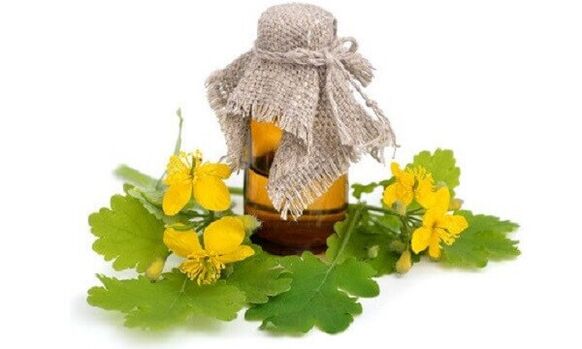
The most effective methods of traditional medicine in the fight against toenails:
- Wiping - to carry it out you will need a freshly harvested plant, thoroughly washed under running water (you can pour boiling water over it).Its stems and leaves are crushed in a meat grinder or blender, after which the juice is squeezed out of the resulting raw material through gauze folded in 3-4 layers.A cotton pad is moistened in the resulting liquid, which is used to thoroughly lubricate the affected areas of the nail plate.Do not apply juice to areas of the skin that are not affected by the fungus.This procedure is repeated daily 2-3 times for 3 weeks.
- Ointment - preparation is possible with the combined use of juice, leaves and stems of celandine, carefully crushed using one of the methods mentioned in the previous paragraph.The raw material obtained after grinding is mixed with butter until smooth.External use of this medicine involves rubbing the ointment into the affected areas 2 to 3 times a day for two weeks.
Herbal traditional medicine
Best recipes:
- Onions or garlic - their uses are the same, since both plants have similar properties.Onion and garlic juice are known for their pronounced antiseptic effect.To treat, you need to take a peeled piece of a particular plant, apply the cut side to the nail and leave it there for 6-7 minutes.This procedure is repeated daily until complete recovery.
- Apricot tree resin - an alcohol tincture is prepared from this viscous or hard raw material.To prepare, you will need to pour a tablespoon of raw material into 250 mg of vodka, using only glass containers (it is better to chop the resin with a knife).The poured resin is put in a dark place for 3 days, while stirring daily.The resulting tincture is applied to the areas affected by the fungus 2 times a day for 7-10 days.
Important!Remember, the use of any traditional medicine to treat toenail fungus requires prior consultation with a doctor.Self-medication, even with the use of harmless components, can be harmful or have no effect at all, which will lead to the progression of the pathological process.
Ointment for nail fungus
Creams or ointments for nail fungus are the most common treatment option for this pathological process.
Classification of antifungal ointments and creams
There is a specific classification of ointments and creams for nail fungus; first of all, such preparations belong to two groups:
- Specific antifungicides - the mechanism of their action becomes clear when deciphering the first word, where “anti” means counteraction, and “fungi” means mushrooms.Drugs in this group have an inhibitory effect on the causative agent of fungal infection - different types of mushrooms.
- Keratolytic - designed to remove dead skin layers.They are also effective in removing sections or layers of the nail plate, because the nail is a type of epidermis.Keratolytics are prescribed for more advanced cases of onychomycosis.
There is another, narrower classification of local agents; such ointments and creams are divided into 2 groups:
- Azoles are created on the basis of triazole or imidazole.The principle of action of medications in this group is based on disruption of the synthesis of ergosterol (a protein that is the main component of the cell membrane of fungal life forms).Since the process of formation of the cell membrane is disrupted, the cell cannot exist, which leads to the death of the pathogen.
- Allylamines - drugs in this group are created on the basis of synthetic components.The mechanism of their action is based on penetration into the deep structures of the nail plate, where the fungus is destroyed at the cellular level.These drugs not only destroy pathogenic microflora, but also prevent its further reproduction, that is, they eliminate relapses.Allylamine preparations are especially effective if the fungal infection is caused by dermatophytes.
Important!When choosing a treatment method and a particular drug, it is important to consider a lot of factors and variables.The necessary information can be obtained mainly through detailed diagnostics.Therefore, you should not buy and use an antifungal agent yourself; medical intervention is necessary.
The most effective ointments and creams for toenail fungus
Regardless of which local remedy is used to treat nail fungus, recovery is impossible if a number of rules are followed.Firstly, the medication must be used strictly according to the instructions or recommendations of the doctor.Secondly, it is important to strictly follow the treatment regimen, without missing a single application of the ointment.
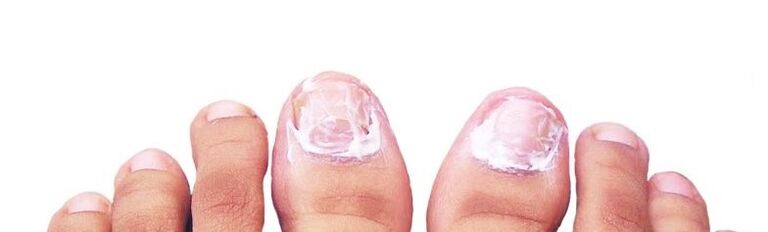
Important!When using topical antifungals, it is important not to stop therapy when the fungus improves or even completely disappears.This may lead to relapse.In most cases, treatment continues for another 1-2 weeks, but it is better to coordinate the tactics of preventive therapy with your doctor.
Making your own ointments
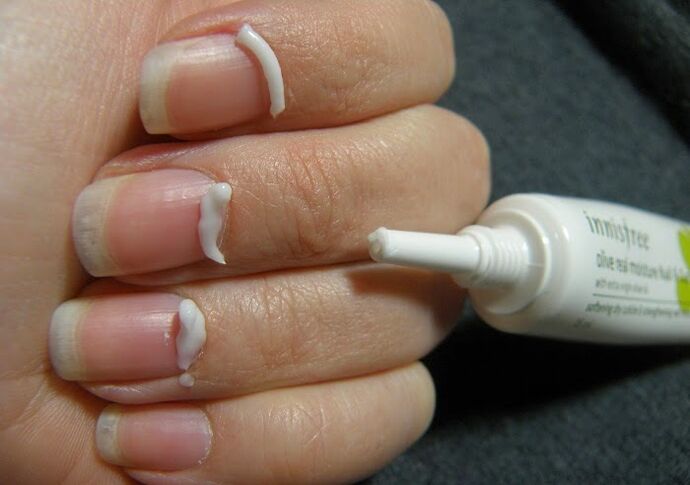
The most effective ointments and creams that you can make yourself:
- Acetic - vinegar, due to its high degree of acidity, is able to suppress the vital activity of fungal life forms and cause their death.Vinegar is especially effective in combination with additional components.To prepare the ointment, you will need to mix 30 ml of vinegar (preferably apple cider vinegar, but regular vinegar will do) with a pre-beaten chicken egg and a teaspoon of dimethyl phthalate.All components are mixed until a homogeneous consistency is applied to the affected areas of the nail up to 2 times a day.
- Based on celandine - the basis for preparing the ointment in this case is butter, the active substance is the leaves, stems and juice of the plant.The preparation process involves grinding the leaves and stems of freshly harvested celandine in a meat grinder or blender.Then the resulting gruel is mixed with high-fat butter until a homogeneous viscous mass is obtained.This product must be stored in the refrigerator using a sealable glass container.Use daily up to 3 times for two weeks.
Important!Such recipes can be described for a long time, they are all different and show good results in the treatment of nail fungus in the early stages of development.You can find out more about methods of treating fungus with folk remedies in a special article.
Features of the use of ointments for nail fungus
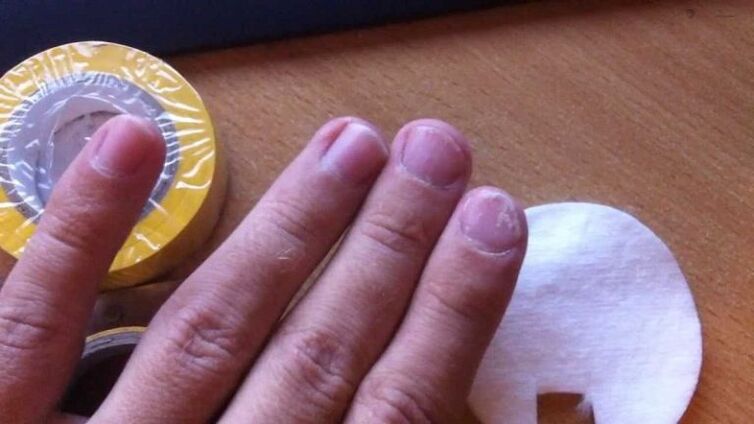
To completely eradicate the fungus, eliminating the likelihood of relapses, it is important to adhere to a number of recommendations:
- One hundred percent adherence to the doctor’s instructions regarding the frequency of application of the ointment for toenail fungus and the timing of treatment.Irregular use of the medication minimizes the therapeutic effect, which is why the effectiveness of treatment disappears and the pathological process progresses.
- Before applying cream or ointment against nail fungus, the nail plate should be prepared.If the nail peels off, it is necessary to remove dead areas, which will ensure deep penetration of the medicine and enhance its effectiveness.
- To make it easier to remove dead parts of the nail plate, it is recommended to first soak your feet in hot water, ensuring the nails soften.By adding salt to the water, the intensity of softening will increase and will be complemented by a disinfecting effect.
- In particularly severe or advanced cases of onychomycosis, ointments and creams are used after complete removal of the nail plate or its individual fragments.In this case, local medications are applied to the skin, and the specifics of their use are clarified by the doctor.
Tips for choosing a fungal remedy
The choice of the most effective drug is made by the doctor, taking into account a number of factors.However, the patient should also know what to look for when purchasing a medicine:
- Age – when buying an antifungal agent for yourself or a loved one, read the contraindications in the instructions.Many medications, even external ones, are not recommended for use at too young or, conversely, old age.There are many reasons for these restrictions, but the main one is the negative impact on the young body, and in the case of old people, the worsening of existing chronic diseases.
- Pregnancy is another common limitation that cannot be ignored.Components of some ointments and creams for toenail fungus can penetrate into the bloodstream, affecting the fetus or the quality of a nursing mother's milk.
- Side effects - the best remedy is the one that has no side effects, but these do not exist today.This is explained by the individual characteristics of each person’s body.The reaction to certain medications can be negative, so before purchasing them, it is a good idea to read the list of side effects.